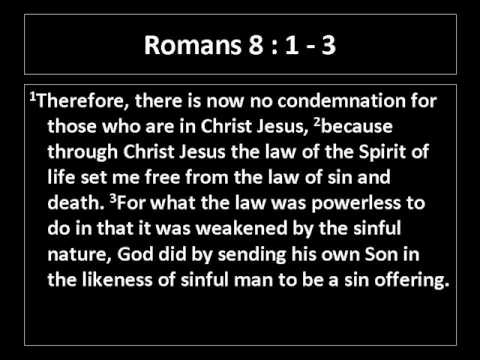
What is the purpose of Law? What is the difference between the codified Law (law of sin and death) v. the Spiritual Law (law of the Spirit of life) in Romans 8:2?
Discussion,
The purpose of all Law, whether it be codified e.g. Hammurabi – Sinai – Criminal Code (Penal Code) – Civil Code (Administrative) or Spiritual Law (divine law written upon the human heart and arbitrated via the human conscience, Romans 2:14-15) is as an arbiter of free will, law which defines human moral behavior i.e. mores – norms – values that are sustainable; moral behavior that furthers the divine prerogatives for Human Kind relevant to the inalienable rights as granted by our Creator e.g. life, liberty, the pursuit of happiness.
Differentiating codified law from spiritual law through application,
Codified laws (a written code) are created in response to the genomic Adamic sin-nature of humanity, a sin-nature possessing the propensity for narcissism, selfishness, pride, arrogance, greed, inordinate affections, inordinate lust, covetousness, all of which are unsustainable behaviors, unsustainable conduct, concerning the welfare, the happiness, the liberty, the sustainability of a social group seeking to exist in an atmosphere of peace, dignity, honor, contentment; this, concerning the whole of the community.
Codified laws define what behavior is sustainable through the “negative” via a definition of what behaviors are NOT sustainable and modern jurisprudence goes to great lengths to provide “elements” that define every behavior that wars against sustainable mores, norms, values, as derived from “natural law” or the Spiritual Law (that law written upon the human heart and arbitrated by human conscience), behaviors “naturally” deemed appropriate thus sustainable for the welfare of the whole of society. It is also true that some codified law is the resultant of trial and error where a society or legislative body determines a particular conduct is not sustainable due to its ultimate destructive, divisive, outcome over time via experiential relevance.
The Codified Law and the lawless in society,
Therefore, the codified law is given for the lawless (1 Timothy 1:9), the antisocial personality, whose conscience is seared, a conscience that is corrupted and not regulated by a natural sense of right and wrong, good and evil, as the Divine “Restrainer” of evil, the Holy Spirit (2 Thessalonians 2:7), is absent in the life of the incorrigible, the rebellious, the narcissist, as they have been given-over to pursue those things, those behaviors, that are not socially sustainable and thus war against life, liberty, the pursuit of happiness relevant to the whole of society (Romans 1:18-32).
Therefore, the codified law, the written code, is given to define what is sustainable behavior through the negative; that is, by defining what behaviors, actions, are NOT sustainable and violate acceptable mores, norms, values and the codified law also articulates the negative consequences (punishment) for participating in this antisocial behavior; hence, the “law of sin and death” (Romans 8:2); therefore, the codified law is the law of condemnation as it defines the culpability of mankind but offers no semblance of hope or atonement for violations of same (Romans 3:20).
It is also relevant and important to note the subjectivity inherit within a written code as the sin-nature of Human Kind goes to great lengths to justify and/or rationalize antisocial behavior via obfuscation/rationalization/the definition of words – subjectivity; therefore, criminal “elements” e.g. mens rea (the guilty mind – “knowingly and willingly or negligently” or actions performed) accompany each individual offense; this, for absolute clarification concerning culpability. How does this written code compare/contrast to the Spiritual Law written upon the human heart?
Finally, the Codified Law and Sinai – Moses,
It’s interesting to note that the Spiritual Law had been in the World working through Human Kind from Adam to Moses and the Spiritual Law convicted the Adamic and Noahic generations (Later – Sodom and Gomorrah) of such defilement that Elohim destroyed all of humanity in judgment by water save eight (Genesis 6; Romans 1:18-32). So why Sinai?
Sinai’s Decalogue etched in stone by Elohim and Moses’ 603-laws scratched upon parchment were codified specifically for sanctification and eschatological purposes concerning Israel’s children as Elohim did NOT desire a repeat of the horrific infidelity displayed by the Adamic/Noahic generations, demonically rooted behavior that thwarted their ability to produce and introduce the Messiah into the World in order to “destroy the works of the Devil” (Genesis 3:15; 1 John 3:8b) via a battle strategy known as the Gospel which was ordained “before Time began” (2 Timothy 1:8-10; Genesis 3:21).
Sinai and Moses’ codified laws, given specifically to Israel’s children and sojourners with them who sought the protective benefits of that theocracy, were but a mere fragment of the comprehensive Spiritual Law written upon the heart of humanity and Sinai and Moses were never intended to be a path to righteousness (a right standing) with Elohim or a path to eternal life in the Kingdom via the forgiveness of sin for if one desired to keep the codified law sufficiently to earn a right standing with Elohim, they were required to keep that codified law in perfect obedience, perfection (James 2:10) which was not possible due the Adamic sin-nature (Romans 5:12); therefore, Sinai and Moses ultimately condemned and cursed anyone seeking righteousness through them (Galatians 3:10; Romans 3:20). From Adam forward, righteousness (a right standing) with Elohim was always predicated upon “faith” (Hebrews 11) and NOT works of the law (Galatians 2:16; Ephesians 2:8-9).
Spiritual Law “Law of the Spirit of Life” (Romans 8:2),
The Spiritual Law, that which is written upon the human heart, infused within the human genome on Day-6 of creation, has been relevant as an arbiter of free will subsequent the creation of the angels. The Spiritual Law or the “Law of the Spirit of Life” (Romans 8:2), the eternal law, defines what is divine law through the positive; that is, the Law of the Spirit of Life motivates and articulates what behaviors and attributes fulfill the righteousness, divine mandates i.e. sustainable behavior as they relate to the holiness and righteousness of our Creator, Elohim, and against these sustainable, holy, righteous, behavior’s (fruit of the Spirit) there is no law (Galatians 5:16-23).
The New Covenant and the Spiritual Law,
It is the Spiritual Law, written upon the human heart on Day-6 of creation, infused within the human genome by Elohim, that is integral with Human Kind having been created in the likeness of Elohim thereby possessing certain divine communicable attributes of our Creator (Genesis 1:26-28). The Spiritual Law written upon the human heart is but one of these divine communicable attributes provided by Elohim for His eschatological purposes going forward.
In the New Covenant, established in Messiah’s blood at Golgotha (Matthew 26:28), it is the Spiritual Law that is employed by the indwelling Holy Spirit who is given by Covenant promise to the redeemed in Jesus (Ephesians 1:13-14; Ezekiel 36:22; Jeremiah 31); it is the Spiritual Law in combination with the redeemed conscience of the faithful in Jesus (2 Corinthians 5:17) that the righteous mandates of the “Law of the Spirit of Life” are fulfilled during daily sanctification as the Holy Spirit methodically prepares the redeemed in Jesus for service in the New Jerusalem; this, as the one who “walks by the Spirit” (Galatians 5:16) is methodically guided by the Spirit when confronted by any number of moral, ethical, decisions made during one’s daily life; it is the indwelling Holy Spirit who urges the redeemed toward righteousness via the redeemed conscience; this, through an enlivened sense of discernment and wisdom via an enlivened and applicable Spiritual Law.
When one honors the Holy Spirit in daily sanctification and allows the Spirit to produce divine “fruit” (Galatians 5:22-23) through them, they obey every Commandment, every edict, that pleases the Father, the Son and the Spirit, eternally, and this fruit will reap rewards at the BEMA Judgment of Messiah Jesus (1 Corinthians 3:13-15). Jesus did say “You will know them by their fruit” (Matthew 7:15-20).
In closing,
Therefore, in the New Covenant of grace, the sin-nature of mankind is moderated-mitigated by the presence of the indwelling Holy Spirit via a New Nature (2 Corinthians 5:17) that wars with the old Adamic sin-nature (Romans 7:14-25) and grace/forgiveness via the imputation of Messiah’s righteousness (2 Corinthians 5:21; Hebrews 8:12) is provided by the Father so that the defiled conscience is mitigated, liberated, by the “new creation” (2 Corinthians 5:17) having been “born again” by faith in Messiah Jesus (John 3:3-5); therefore, peace with the Father is realized through faith in Jesus (Romans 5:1) and redeemed mankind is freed from the consequences of the written code by grace (Romans 6:14) and is therefore able to live in harmony with Elohim and walk in a manner that pleases Elohim via the production of “divine fruit” during daily sanctification; divine fruit, against which there are no laws as this divine fruit defines the very nature of our Holy and Righteous Creator and His will for humanity as well as His will for His cherished angelic creation (Galatians 5:22-23; Romans 8:1-9).