
To those who worship at Sinai, not Golgotha; To those who worship the Law to the exclusion of or in addition to the Messiah; To those perishing in Hell in self-righteousness through law-keeping…
Discussion,
Sinai is but a fragmented, codified, version of the comprehensive Spiritual Law; the Spiritual Law that Elohim has employed as an arbiter of free will subsequent the creation of the angels. Sinai is beautiful and partially expresses Elohim’s holiness and divine expectations; much can be learned from Sinai, but Sinai is incomplete as it simply addresses Elohim’s concerns for Jacob’s children and their inevitable compromise with demonic paganism; specifically, the vile worship of Baal and Molech as demonstrated by the pagan tribes surrounding Jacob’s children that relentlessly sought Israel’s compromise.
Sinai was given the Hebrew Tribes for eschatological protection via sanctification; this, to Jacob’s children, exclusively; this, as Elohim was concerned that Israel’s children would be disqualified as progenitors of the Messiah like those of the Adamic and Noahic generations who sold their soul to Satan and his demonic angels resulting in the annihilation of human kind save eight (Genesis 6; Romans 1:18-32).
Are Christians seeking to replace Sinai?
No one is seeking to replace Sinai but Sinai is not Elohim’s eschatological destination; Sinai, Moses, Torah, were roadmaps pointing to Elohim’s objective (Galatians 3:24-25); that is, the “destruction of Satan’s works” via the coming Messiah (1 John 3:8b; Genesis 3:15) via a battle strategy introduced as the “Gospel” which was ordained “before Time began” (2 Timothy 1:8-10; Genesis 3:21).
Worshiping at Sinai to the exclusion of Golgotha,
You represent those who will perish at the foot of Mount Sinai, who serve the golden calf (works – idolatry) as opposed to the Messiah as you seek your own righteousness via self-righteousness via a Law that only defines your sin void atonement (Romans 3:20; Romans 9); a Law that demands absolute perfection (James 2:10) from your sin-nature, the Adamic sin-nature that can never adequately comply (Romans 3:23; 5:12) and a Law that “curses” you as you perish in your sin in unbelief (Galatians 3:10; John 8:24).
Your only Hope,
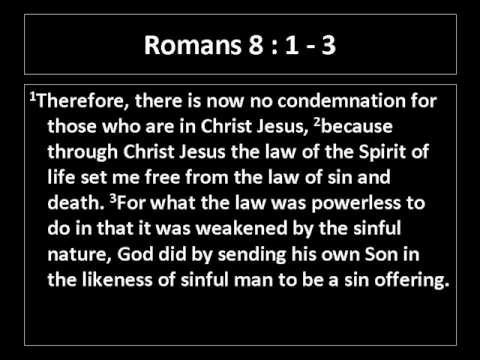
Your only Hope of escaping the “second death” in Hell due to your sin is through repentance and sincere faith-belief-trust in Jesus Christ as the One, the Messiah, who kept the Law for you in perfection, shed His innocent blood to atone for your sin and offers you His righteousness in exchange for your sin by faith in Him as Messiah and receive forgiveness via New Covenant promise (John 3; 2 Corinthians 5:21; Hebrews 8:12).
 "RickeyD" Holtsclaw